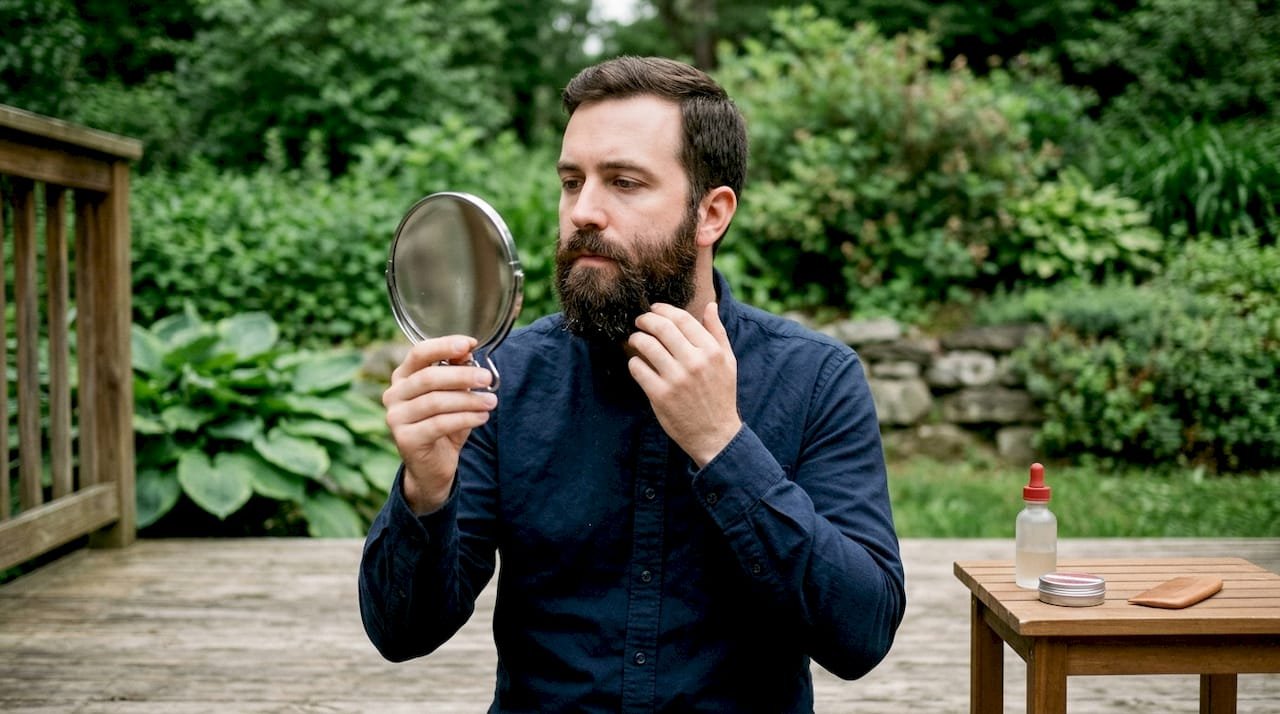
Beard dandruff is defined as flaking skin beneath facial hair caused primarily by seborrheic dermatitis, a yeast-driven inflammatory skin condition. The culprit is Malassezia yeast, which feeds on skin oils and produces oleic acid, triggering redness, itching, and visible flakes. Seborrheic dermatitis affects roughly 11–15% of men with facial hair. That number is higher than most men expect, which means you are far from alone, and the condition is well understood enough to treat effectively without shaving your beard off.
1. What causes beard dandruff and how is it different from dry skin?
Beard dandruff has two distinct causes, and mixing them up leads to the wrong treatment. The first is simple dry skin under the beard, which produces powdery white flakes and a feeling of tightness. The second, and more common, is seborrheic dermatitis, a condition where Malassezia yeast overgrowth triggers inflammation and produces thicker, yellowish, oily scales that return quickly after washing.
The biological difference matters. Dry skin flakes appear occasionally and respond well to moisturizer. Seborrheic dermatitis flakes are persistent, often accompanied by redness, and get worse if you treat them like a hygiene problem.
Here is how to tell them apart:
- Dry skin flakes: White, powdery, fine texture, skin feels tight and rough
- Seborrheic dermatitis flakes: Yellowish, thicker, slightly greasy, skin looks red or irritated
- Dry skin trigger: Cold weather, dehydration, or harsh cleansers
- Seb derm trigger: Yeast overgrowth, stress, seasonal changes, or wrong beard products
Over-washing makes seborrheic dermatitis worse, not better. Harsh cleansers strip skin barrier oils, which triggers your skin to produce more oil, which feeds more Malassezia yeast. This reactive cycle is the most common mistake men make when they first notice flaking.
Pro Tip: If your flakes come back within 24–48 hours of washing, you are likely dealing with seborrheic dermatitis, not simple dry skin. That distinction changes everything about how you treat it.
2. Effective dry skin under beard treatment: the right cleansing routine
The most effective treatment for dry skin under beard and seborrheic dermatitis combines antifungal cleansing with skin barrier protection. Aggressive scrubbing and daily washing do the opposite of what you want.
Follow this routine:
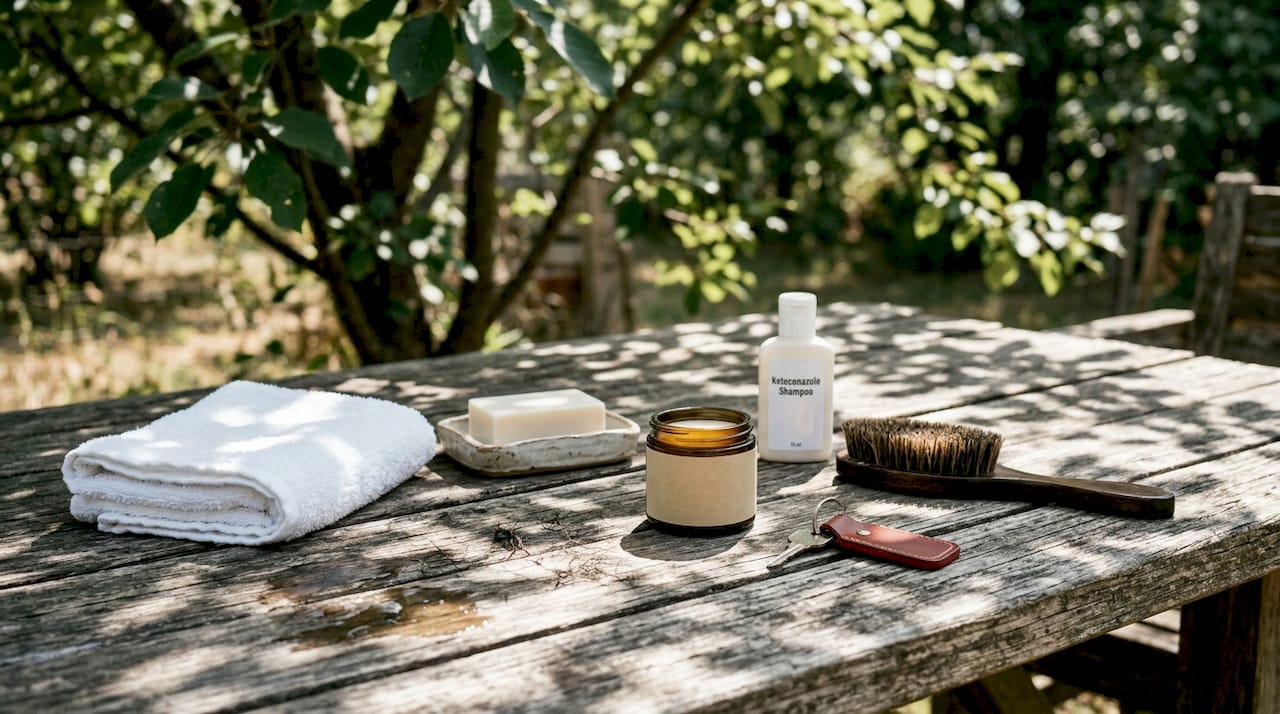
- Use a ketoconazole 1–2% antifungal shampoo two to three times per week. Ketoconazole targets Malassezia directly at the source.
- Leave the shampoo on your skin for 3–5 minutes before rinsing. Ketoconazole needs contact time to reduce yeast effectively. Rinsing immediately wastes most of its antifungal effect.
- Rinse with cool or lukewarm water. Hot water strips the natural oils your skin needs to stay balanced.
- On non-wash days, use a gentle, sulfate-free beard wash to clean without disrupting your skin barrier.
- Apply a beard oil with MCT C8 (caprylic acid) after washing. MCT C8 oil is antifungal and does not feed Malassezia, making it the safest moisturizing option for dandruff-prone skin.
The goal is stabilization, not eradication. Effective management focuses on stabilizing the skin barrier rather than trying to eliminate yeast entirely, since Malassezia is a permanent resident on human skin.
Pro Tip: Set a timer when applying ketoconazole shampoo. Most men rinse within 30 seconds, which is far too soon. Three minutes feels long in the shower, but it is the difference between results and frustration.
3. Beard care products to avoid when you have dandruff
The wrong products actively worsen seborrheic dermatitis. Most men do not realize their beard oil is feeding the yeast causing their flakes.
Avoid these:
- Oils high in oleic acid: Olive oil, castor oil, and argan oil all feed Malassezia yeast and worsen flaking. These are common in mainstream beard oils, so check the ingredient list.
- Sulfate-based cleansers: Sodium lauryl sulfate and similar detergents strip the skin barrier and trigger the reactive oil cycle.
- Fragrance-heavy products: Added fragrances irritate already inflamed skin and can cause contact dermatitis on top of seborrheic dermatitis.
- Thick, occlusive balms and butters used on skin: These trap moisture but also trap yeast. Apply balms to the beard hair itself, not directly on the skin.
- Frequent physical exfoliants: Scrubs and exfoliating brushes damage the skin barrier when used on active flare-ups. Save brushing for maintenance, not treatment phases.
The safest product profile for dandruff-prone beards is fragrance-free, non-comedogenic, and built around antifungal-friendly ingredients. A gentle daily wash paired with an MCT-based oil covers both cleansing and moisturizing without feeding the problem.
4. Lifestyle and environmental factors that trigger flare-ups
Seborrheic dermatitis is not static. It flares and calms based on what is happening in your life and the environment around you.
The most common triggers include:
- Stress: Elevated cortisol suppresses immune response, which allows Malassezia to overgrow more easily.
- Winter weather: Winter dryness worsens flakes and reduces the skin’s ability to maintain its natural barrier. Cold air outside and heated air inside both pull moisture from skin.
- High humidity: Warm, humid conditions accelerate yeast growth. The beard itself creates a micro-environment that traps heat, oil, and debris close to the skin.
- Diet and sleep: Poor sleep and high-sugar diets correlate with inflammatory skin conditions, including seborrheic dermatitis.
Adjusting your routine seasonally makes a real difference. In winter, increase moisturizing frequency and switch to a slightly richer MCT oil application. In summer, focus more on gentle cleansing to manage excess oil production. The beard traps everything close to the skin, so what goes on around it matters as much as what you put on it.
Avoid the trap of washing more when flakes appear. Over-washing triggers a reactive cycle that increases oil production and gives Malassezia more to feed on. Wash less, wash smarter.
5. Do you need to shave to get rid of beard dandruff?
Shaving is not required to treat seborrheic dermatitis, and in many cases it makes things worse. Shaving can irritate already inflamed skin, introducing micro-cuts that increase redness and discomfort during a flare-up.
The beard itself is not the problem. Malassezia yeast lives on skin with or without facial hair. The beard creates a warmer, oilier micro-environment that can accelerate yeast growth, but removing the beard does not remove the underlying condition.
A consistent routine with a medicated wash and antifungal oil controls seborrheic dermatitis effectively while keeping your beard intact. Trimming during a bad flare-up can reduce the density of the micro-environment and make it easier to apply treatment products to the skin. That is a practical option, not a cure.
Proper dry beard skin treatment preserves both your beard and your skin health. The men who see the best results are those who treat the skin condition directly rather than trying to remove the beard as a workaround.
Key takeaways
Beard dandruff is a yeast-driven skin condition that responds to antifungal cleansing, MCT-based moisturizing, and avoiding oleic-acid-rich oils, not to aggressive washing or shaving.
| Point | Details |
|---|---|
| Identify your flake type | Yellow, oily flakes indicate seborrheic dermatitis; white, powdery flakes suggest dry skin. |
| Use ketoconazole correctly | Leave antifungal shampoo on skin for 3–5 minutes, two to three times per week. |
| Choose the right oil | MCT C8 (caprylic acid) oil moisturizes without feeding Malassezia yeast. |
| Avoid oleic-acid oils | Olive, castor, and argan oils worsen flaking by feeding the yeast causing dandruff. |
| Shaving is not the answer | A consistent antifungal routine controls seborrheic dermatitis while preserving your beard. |
What I have learned from years of watching men treat beard dandruff wrong
Most men who come to me frustrated with beard dandruff have one thing in common: they treated it like a dirt problem. They washed more, scrubbed harder, and reached for the strongest cleanser they could find. Every one of those choices made the condition worse.
The mental shift that actually helps is understanding that seborrheic dermatitis is a skin condition, not a hygiene failure. Your beard is not dirty. Your skin is reacting to a yeast that lives on everyone’s skin. The goal is not to scrub it away. The goal is to change the environment so the yeast cannot overgrow.
The men who get lasting results do two things consistently: they use an antifungal wash at the right frequency, and they moisturize with an oil that does not feed the problem. That is it. No complicated 10-step routine. No expensive gadgets. Just the right products used correctly.
The hardest part is patience. Seborrheic dermatitis does not clear in three days. Give a proper routine four to six weeks before judging it. If you stay consistent, the flaking reduces, the itching settles, and your beard looks better than it did before you started.
Products at Treat My Beard store built for dandruff-prone beards
Treat My Beard e-shop carries a curated range of beard care products designed specifically for men managing dry beard skin and seborrheic dermatitis.
The Beard Guyz Beard Oil 2-pack is formulated to moisturize without feeding Malassezia, making it a direct match for the antifungal oil approach outlined above. For cleansing, the Badass Beard Care Beard Wash with tea tree offers a gentle, effective option that cleans without stripping your skin barrier. Both products align with the stabilization-first philosophy that dermatology research backs for managing beard dandruff.
FAQ
What is beard dandruff caused by?
Beard dandruff is caused primarily by seborrheic dermatitis, a condition driven by Malassezia yeast overgrowth on the skin beneath facial hair. The yeast produces oleic acid, which triggers inflammation, itching, and flaking.
How do I treat dry skin under my beard at home?
Use a ketoconazole 1–2% antifungal shampoo two to three times per week, leave it on for 3–5 minutes, and follow with an MCT C8 beard oil to moisturize without feeding the yeast.
Can beard dandruff go away on its own?
Seborrheic dermatitis rarely resolves permanently without treatment. Symptoms may calm during certain seasons but typically return without a consistent antifungal routine to control Malassezia overgrowth.
Should I shave my beard to get rid of dandruff?
Shaving is not necessary and can irritate inflamed skin further. A consistent routine with medicated washes and antifungal oils controls the condition effectively while keeping your beard intact.
Which beard oils are safe to use with dandruff?
Beard oils based on MCT C8 (caprylic acid) are the safest choice because they moisturize without feeding Malassezia. Avoid oils high in oleic acid, including olive oil, castor oil, and argan oil, as these worsen flaking.