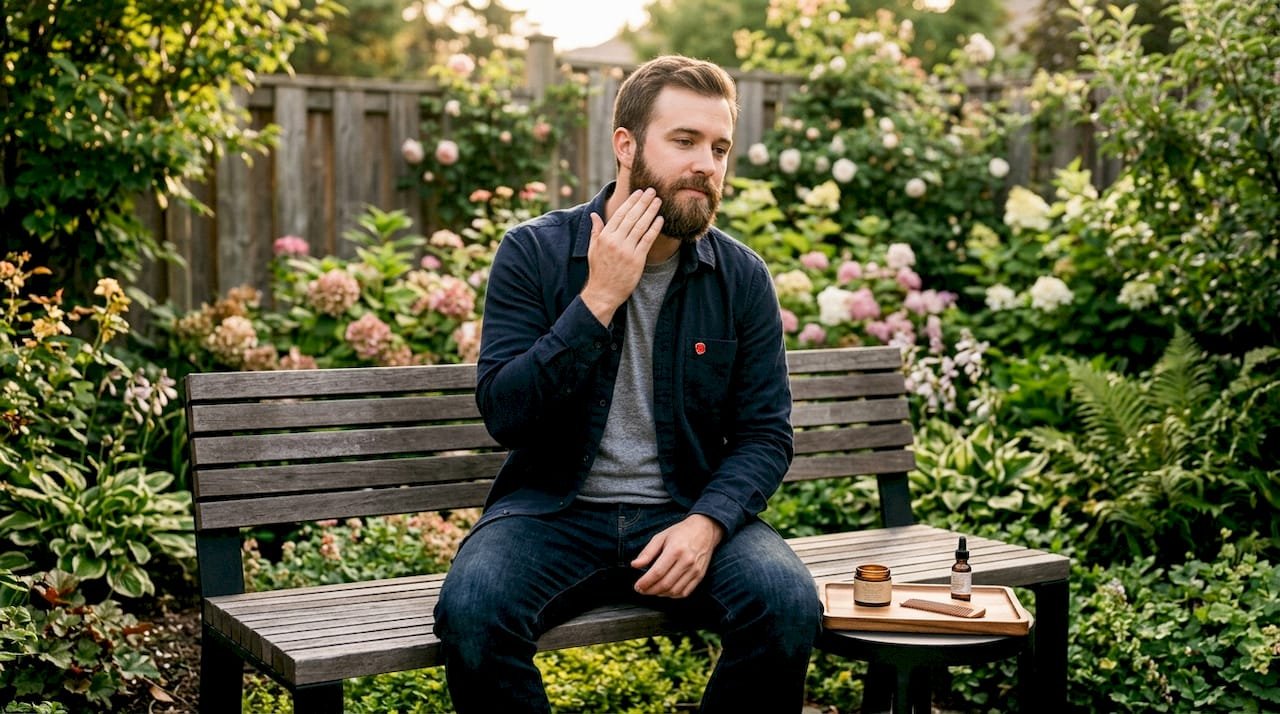
Itchy beard relief is the process of eliminating skin irritation beneath facial hair through proper cleansing, hydration, and targeted treatment. Most men experience beard itch during the first few weeks of growth, but for many, the problem persists well beyond that window. The cause is almost never the beard itself. It is the skin underneath, stripped of moisture and disrupted by the wrong products. Treat My Beard carries a full range of beard washes, oils, and balms formulated specifically to address this problem without adding new irritants to the mix.
What causes itchy beard relief to feel out of reach?
Beard itch, clinically described as facial pruritus, has several distinct causes. Understanding which one applies to you determines which fix actually works.
The most common trigger is skin barrier disruption. Sulfate-based cleansers increase transepidermal water loss by 217%, which means your skin dries out far faster after every wash. That dryness creates microscopic cracks in the skin surface, and those cracks itch.
A second, less obvious cause is neurogenic pruritus. This is itch caused by nerve irritation rather than dryness. Ingredients like menthol, camphor, and ethanol trigger this response directly. Many grooming products market these ingredients as “cooling” or “refreshing,” but on facial skin they often cause persistent discomfort that no amount of moisturizer will fix.
Beard growth itself also plays a role. During days 10–21 of growth, new hairs curl back toward the skin as they emerge. That physical friction creates a scratch-inflammation cycle that compounds any existing dryness. Common skin conditions like seborrheic dermatitis and contact dermatitis sit underneath many chronic cases. Product residue from conditioners or styling products left on the skin adds another layer of irritation.
Key contributing factors include:
- Sulfates and harsh surfactants that strip the skin’s natural oil layer
- Neurogenic irritants such as menthol, camphor, and ethanol in grooming products
- Beard hair friction against skin during the early growth phase
- Seborrheic dermatitis, a fungal skin condition that causes flaking and itch
- Product buildup from conditioners, balms, or styling agents not fully rinsed out
Pro Tip: Check the ingredient list on every product you currently use. If menthol, camphor, or ethanol appears in the first five ingredients, that product may be driving your itch rather than relieving it.
How should you wash your beard to reduce itch?
Cleansing is where most men make their biggest mistake. Washing too often, or with the wrong product, strips the skin barrier faster than it can recover.
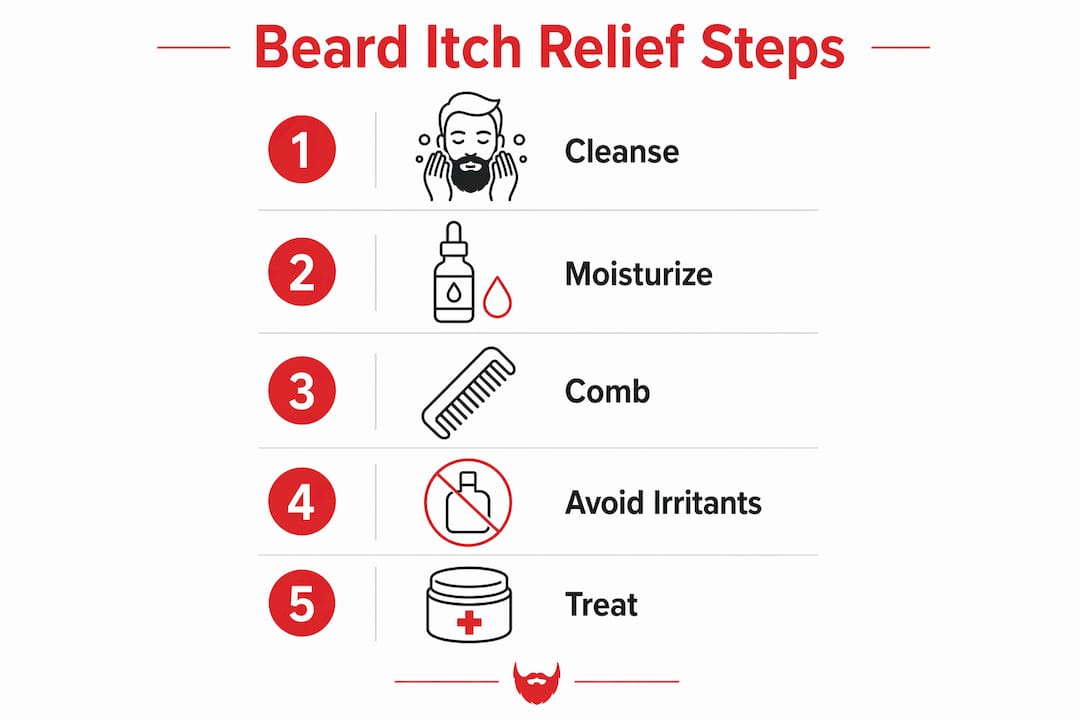
Wash your beard 2–3 times per week at most. Overwashing with harsh soaps aggravates beard itch by removing the natural sebum that keeps skin supple. Daily washing with a standard body soap is one of the most reliable ways to keep itch going indefinitely.
Choose a pH-balanced, sulfate-free cleanser. Look for cocamidopropyl betaine and glycerin in the ingredient list. These two compounds clean effectively without disrupting the acid mantle of your skin. The Beard Guyz Daily Wash is formulated with gentle cleansing agents suited for men with sensitive or itch-prone skin.
For men dealing with flaking alongside itch, ketoconazole 2% shampoo is the clinical standard. Ketoconazole 2% shampoo used twice-weekly reduces beard itch and scaling by 78% over 4 weeks. That result is significant because it targets the fungal component of seborrheic dermatitis directly. Limit use to three times per week to avoid microbial resistance.
Follow this washing sequence for best results:
- Wet the beard thoroughly with lukewarm water, not hot. Hot water accelerates moisture loss.
- Apply a small amount of sulfate-free cleanser and work it into the skin beneath the hair, not just the hair itself.
- If using ketoconazole shampoo, leave it on the skin for a full 5 minutes. Facial skin requires longer contact time than scalp skin due to a thicker outer layer and denser hair.
- Rinse with cool or lukewarm water. Cold water helps close the pores and calm any surface inflammation.
- Pat dry gently. Never rub. Rubbing creates friction that restarts the itch cycle immediately.
Pro Tip: Use a fine-tooth beard comb after washing to detangle while the skin is still slightly damp. This distributes any remaining moisture evenly and reduces the friction that causes morning itch.
How does moisturizing actually stop beard itch?
The most important insight in beard itch care is this: hydrating the skin beneath the beard matters far more than conditioning the hair itself. Most men do the opposite. They apply product to the visible hair and wonder why the itch continues.
Beard oils work because they mimic the skin’s natural sebum. The best formulas use jojoba oil, which matches the molecular structure of human sebum closely enough that skin absorbs it without clogging pores. Argan oil adds vitamin E and essential fatty acids that repair the skin barrier over time. Both are lightweight, non-comedogenic, and proven to reduce the friction that drives the scratch-inflammation cycle.
Applying a single drop of lightweight beard oil before bed during the early growth phase (days 10–21) reduces friction overnight and prevents the itch that typically peaks the following morning. This one habit alone eliminates a significant portion of early-stage beard itch for most men.
Key moisturizing principles to follow:
- Target the skin, not just the hair. Press oil into the skin with your fingertips before working it through the hair.
- Apply after washing while skin is still slightly damp. Moisture locks in better on damp skin than on dry skin.
- Use lightweight oils. Heavy, comedogenic oils like coconut oil can block follicles and worsen irritation on acne-prone skin.
- Add a beard balm for longer beards. Balms with shea butter and beeswax seal in the oil layer and reduce hair-to-skin friction throughout the day.
- Avoid vitamin E overload. A small amount supports barrier repair, but heavy vitamin E serums can feel greasy and attract dirt.
A beard conditioner used after washing softens the hair shaft, which reduces the mechanical irritation caused by coarse hairs rubbing against skin. This is especially useful during the first month of growth.
What treatments work for persistent beard itch?
When standard cleansing and moisturizing do not resolve the itch within two weeks, targeted treatment becomes necessary. Persistent itch usually points to seborrheic dermatitis, contact dermatitis, or a compromised skin barrier that needs more than routine care.
Ketoconazole 2% shampoo is the first-line clinical treatment for seborrheic dermatitis under the beard. The 5-minute contact time rule is non-negotiable. Shorter contact times do not allow adequate penetration through the denser facial hair and thicker stratum corneum.
For inflamed, red patches, low-potency corticosteroids provide fast relief. Low-potency corticosteroids are effective for acute inflamed patches but should not be used beyond 7 days. Prolonged use risks skin atrophy and rebound dermatitis, both of which are harder to treat than the original itch.
A non-steroidal alternative worth knowing is crisaborole 2% ointment. Crisaborole 2% decreases beard itch intensity by 63% within 14 days without the atrophy risk associated with steroids. It works by inhibiting phosphodiesterase-4, an enzyme involved in skin inflammation. This makes it a strong option for men who need more than moisturizer but want to avoid steroid side effects.
For acute itch episodes, cold compress therapy works immediately and requires no product at all. A cold, damp cloth held for 30–120 seconds constricts blood vessels and dulls nerve signals, providing fast relief without disrupting the skin barrier. It is the fastest beard itch remedy available and costs nothing.
“When itch is acute and intense, reach for a cold compress before reaching for a product. Vasoconstriction quiets the nerve signals driving the itch within seconds. No topical can match that speed for immediate relief.”
See a dermatologist if itch is accompanied by open sores, significant swelling, or does not respond to ketoconazole after 4 weeks of consistent use. These signs point to conditions that require prescription-strength treatment.
What mistakes make beard itch worse?
Men often worsen beard itch by overreacting. The most common response to an itchy beard is to wash it more, scratch it more, or shave it off. All three choices extend the problem rather than solving it.
Avoid these mistakes:
- Washing daily with body soap or shampoo. These products are formulated for scalp or body skin, not facial skin. They strip the acid mantle and leave the skin defenseless against irritation.
- Scratching with fingernails. Scratching breaks the skin surface, introduces bacteria, and triggers a histamine response that makes itch worse within minutes.
- Trimming or shaving during the growth phase. Cutting hairs creates sharp edges that re-enter the skin at a more aggressive angle, increasing follicular irritation.
- Using products with irritant ingredients. Alcohol-based aftershaves, menthol-heavy balms, and fragranced oils are the most common offenders.
- Skipping moisturizer because the beard “looks fine.” Itch lives in the skin, not the hair. A beard that looks healthy can still sit on top of severely dry, irritated skin.
Pro Tip: Commit to a consistent routine for at least 3 weeks before judging whether it works. Skin barrier repair takes time. Switching products every few days resets the clock and prevents any single approach from showing results.
Key Takeaways
Effective beard itch relief requires targeting the skin beneath the beard, not just the hair, using gentle cleansers, lightweight oils, and proven treatments like ketoconazole 2% shampoo.
| Point | Details |
|---|---|
| Sulfates drive itch | Switch to sulfate-free cleansers with cocamidopropyl betaine to protect the skin barrier. |
| Wash less, not more | Limit beard washing to 2–3 times per week to preserve natural skin oils. |
| Oil the skin first | Apply lightweight beard oil directly to the skin beneath the hair, especially before bed. |
| Use ketoconazole correctly | Leave ketoconazole 2% shampoo on facial skin for 5 minutes for effective penetration. |
| Cold compresses work fast | A cold, damp cloth held for 30–120 seconds dulls nerve signals and stops acute itch immediately. |
What I’ve learned from years of watching men fight beard itch
The most common pattern I see is this: a man starts growing a beard, hits the itch wall around week two, and either shaves it off or buys every product he can find and uses them all at once. Both responses guarantee failure.
The men who get past the itch are the ones who do less, not more. One gentle wash. One lightweight oil. One consistent routine. The skin beneath a beard is not fundamentally different from the skin on the rest of your face. It responds to the same things: moisture, gentle cleansing, and time.
What surprises most men is how quickly the wrong product can undo a week of good habits. A single application of an alcohol-based product on already-dry skin can set the barrier back by days. Reading ingredient labels is not optional if you are serious about relief.
The other thing I would tell anyone starting out: the itch is not a sign that your beard is unhealthy. It is a sign that your skin needs support during a transition. Give it that support consistently, and the itch resolves. Every time.
The Beard Guyz Beard Oil 2-pack is the most practical starting point for itch relief. It delivers jojoba and argan oil directly to the skin beneath the beard, where the irritation actually lives. Pair it with the Beard Guyz Beard Balm for longer beards that need extra friction control throughout the day. For men who want to address cleansing and conditioning together, the full product range at Treat My Beard includes gentle washes, conditioners, and grooming tools suited for sensitive skin. Free delivery and a 30-day return policy mean you can try the routine without risk.
FAQ
What is the fastest way to stop beard itch?
A cold, damp cloth held against the skin for 30–120 seconds constricts blood vessels and dulls nerve signals, providing immediate relief. Follow with a lightweight beard oil to address the underlying dryness.
How often should I wash my beard to prevent itch?
Wash your beard 2–3 times per week with a sulfate-free cleanser. Daily washing strips natural oils and worsens the skin barrier, which is the primary driver of beard itch.
Does beard oil actually help with itch?
Yes. Lightweight beard oils containing jojoba or argan oil replenish the skin’s moisture barrier and reduce the friction that causes the scratch-inflammation cycle. Apply directly to the skin, not just the hair.
What ingredient should I avoid if my beard itches?
Avoid menthol, camphor, and ethanol in beard products. These ingredients cause neurogenic pruritus, a nerve-driven itch that is not related to dryness and does not respond to moisturizer.
When should I see a doctor about beard itch?
See a dermatologist if itch persists after 4 weeks of consistent ketoconazole 2% shampoo use, or if you notice open sores, significant swelling, or spreading redness. These signs indicate a condition beyond routine beard itch.